Last updated November 23, 2026
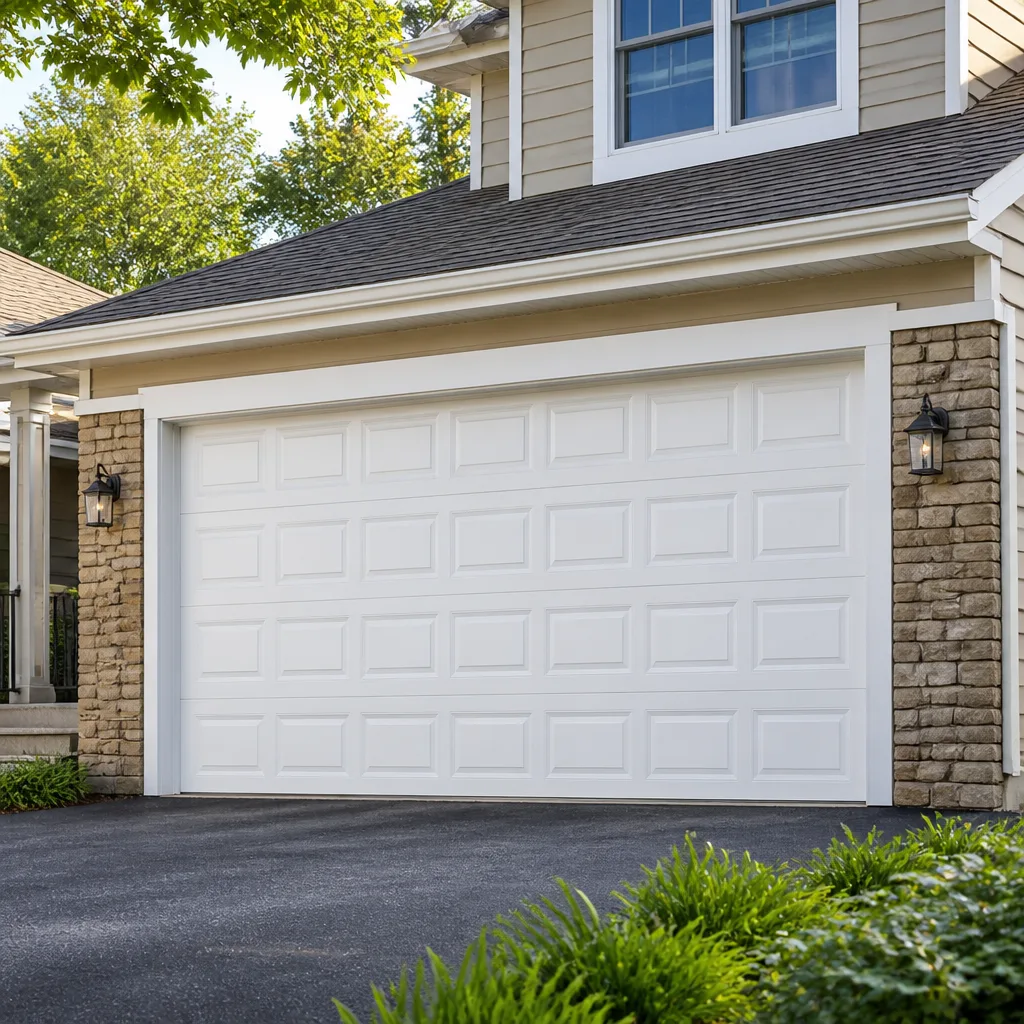 Raised-panel steel
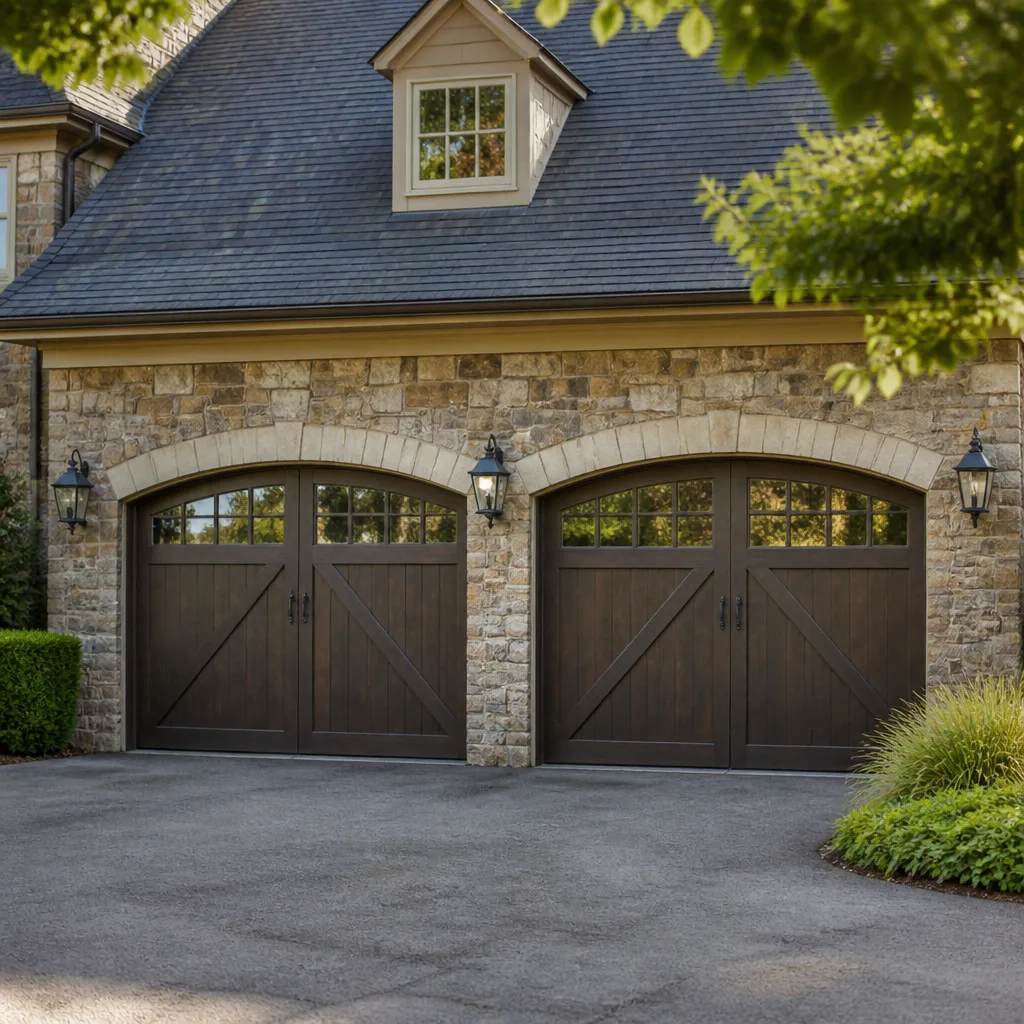 Carriage house
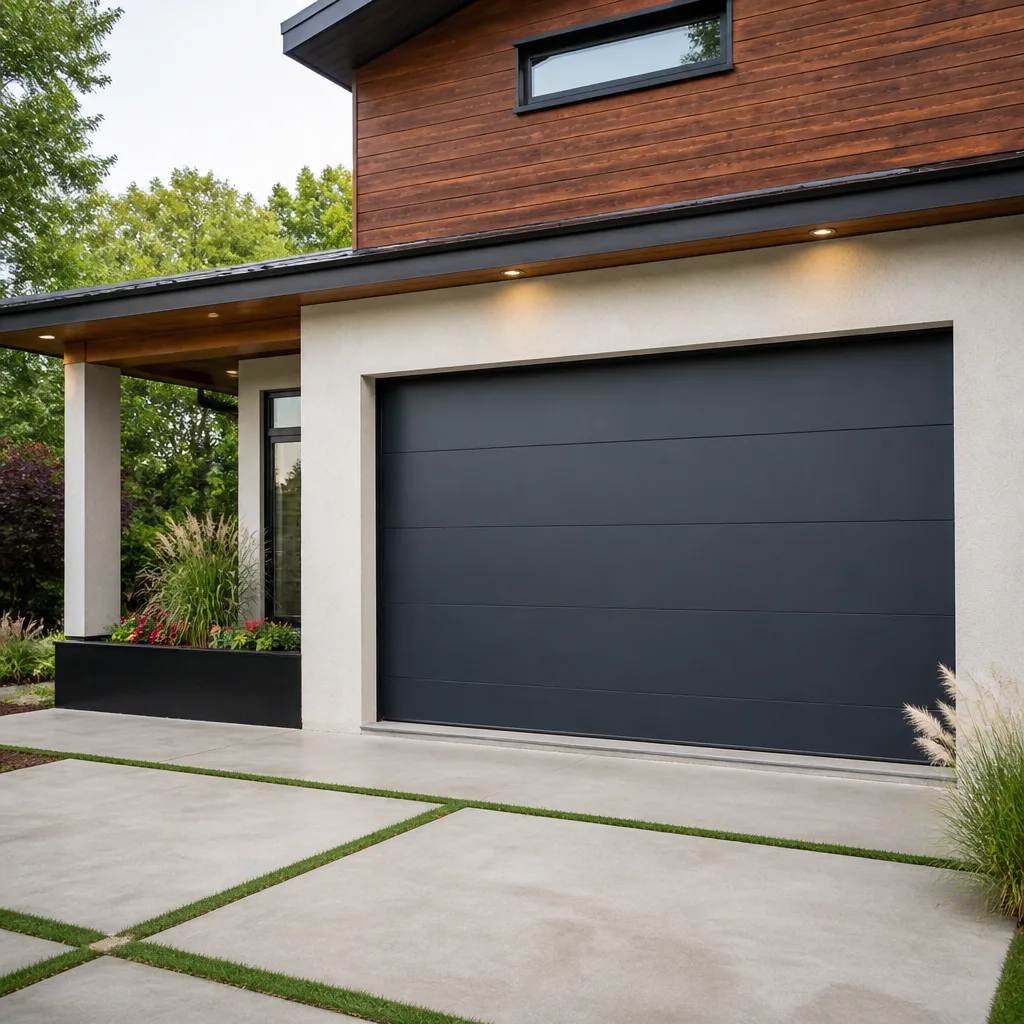 Modern flush
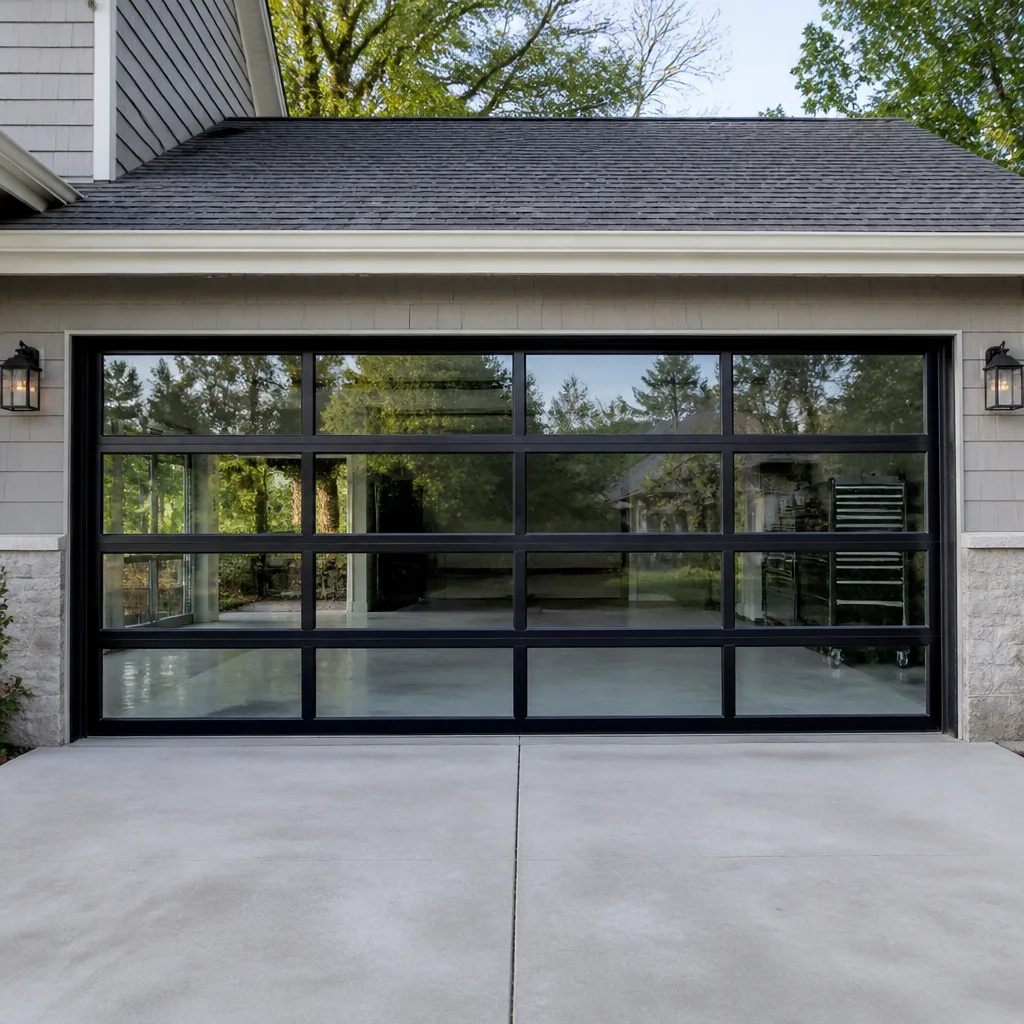 Full-view glass
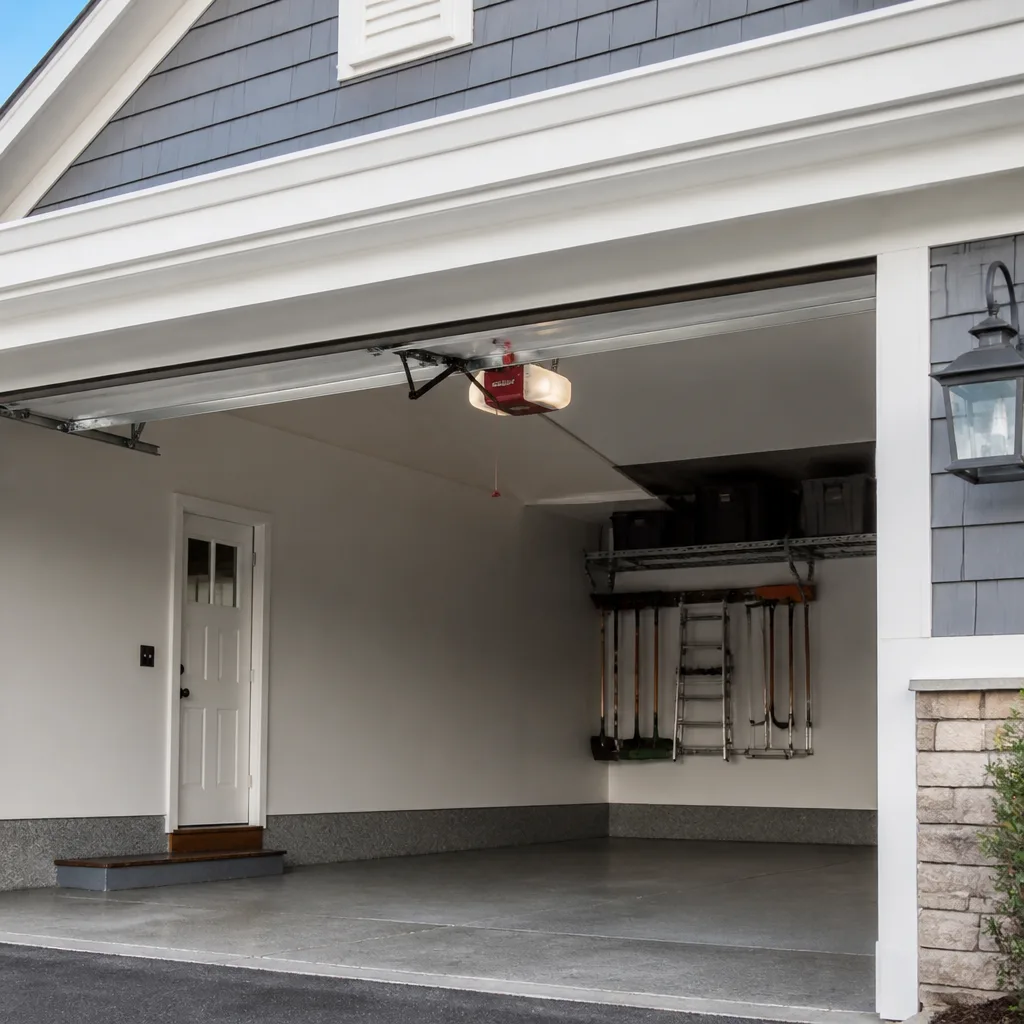 LiftMaster openers
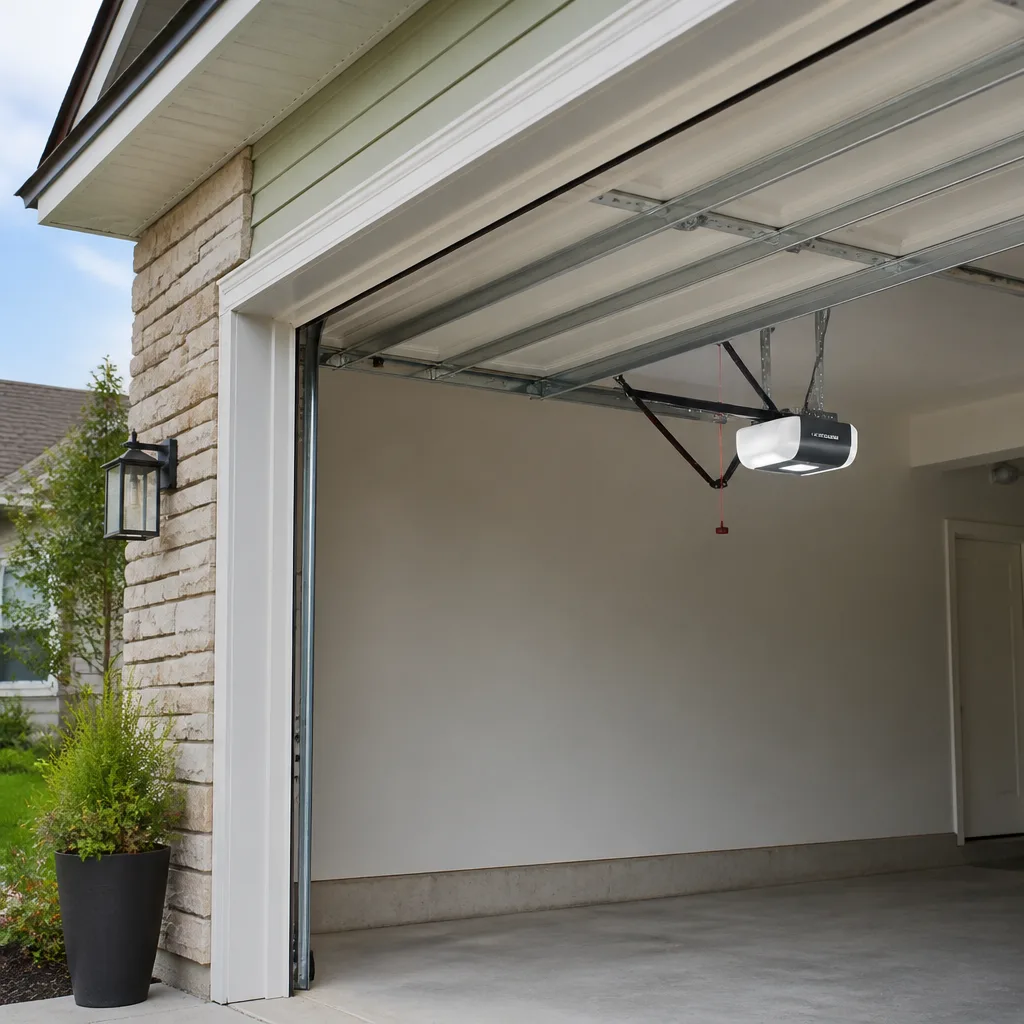 Chamberlain openers
Full 25-point door and opener safety check with every visit - springs, cables, rollers, tracks, and your LiftMaster or Chamberlain opener included
You get a price before we start. It does not change when the pro arrives.
Get your free estimateGarage Door Emergency Preparedness Guide for Charlottesville Homes
Most homeowners think of their garage door as a convenience until the moment it stops working. The bigger misconception is that a power outage is the real problem. It isn’t. The problem is that almost nobody has ever pulled the manual release cord on their own opener, so when the power goes out, the door stays stuck and the car stays inside. Central Virginia gets ice storms, derecho wind events and outages that stretch past a day, and in Charlottesville that combination catches people off guard. This guide covers the three failure scenarios that actually happen here and exactly what to do in each one.
Quick Answer
A garage door emergency in Charlottesville usually comes down to one of three failures: the door won’t open because of a power outage, the door won’t close and leaves the house open, or the door was damaged by wind or a fallen limb. In each case, the fastest path is a manual release for outage lockouts, a physical block or brace for a door stuck open, and a call for professional service when springs, cables or tracks are involved. Never force a door with a broken spring or a bent track.
Styles & brands we work with
- Raised-panel steel
- Carriage house
- Modern flush
- Full-view glass
- LiftMaster openers
- Chamberlain openers
Table of Contents
- Scenario 1: The Power Is Out and the Door Won’t Move
- How to Use the Manual Release on Common Charlottesville Openers
- How to Secure a Door You’ve Manually Released
- Scenario 2: Post-Storm Damage You Can’t See
- Scenario 3: Battery Backup – What Actually Works in a Long Outage
- Who to Call and What to Say to Get Prioritized
- Seasonal Preparedness Checklist for Charlottesville Homes
Scenario 1: The Power Is Out and the Door Won’t Move
During the January 2022 I-95 ice event, parts of Central Virginia lost power for 18 to 36 hours. Homeowners with automatic openers and no manual release familiarity found themselves locked out of their own garages in sub-freezing temperatures. That’s the first scenario, and it’s the one you can prepare for in about ten minutes on a calm afternoon.
An automatic opener holds the door in the closed position with a carriage that rides on the rail. When the power drops, the carriage stays engaged and the door stays locked in place. The motor isn’t broken. The door isn’t broken. The connection between them just needs to be released by hand.
What makes this an emergency in Charlottesville rather than an annoyance is temperature and access. A car trapped inside means no way to get to work, no way to run an errand, and in an ice storm, no way to leave if the situation inside the house changes. If your garage is your primary entry point, as it is for a lot of homes around Belmont and Fifeville where driveways feed straight into the house, an outage that lasts half a day becomes a real logistics problem.
Two things to know before an outage happens:
- Find the release cord now, while the power is on. It hangs from the carriage on the opener rail, usually with a red or T-shaped handle.
- Test it once with the door fully closed and the opener disengaged. Pull it, lift the door a few inches by hand, then re-engage the carriage by running the opener. Knowing the feel of it before you need it matters.
If the power is already out and your door won’t budge, don’t pull harder on the opener. Go to the manual release. That’s the next section.
How to Use the Manual Release on Common Charlottesville Openers
The manual release is the same mechanical idea across nearly every residential opener, but the cord stiffness and the carriage design vary by brand. Most openers in Charlottesville homes are LiftMaster, Chamberlain or Craftsman units, with Genie and Raynor showing up regularly too. Here’s the general procedure, which works on all of them.
- Confirm the door is fully closed. Releasing a door that’s partway up puts the full weight on the springs and can drop the door. If the door is open and the power is out, leave it and read the next section instead.
- Locate the release cord. It hangs from the trolley or carriage on the rail above the door. On most models it’s a short rope with a handle.
- Pull straight down and slightly toward the door. A firm, steady pull is what disengages the carriage. Yanking sideways rarely works and can jam the trolley.
- Lift the door by hand. A properly balanced door should lift with one hand and stay where you put it. If it feels heavy or crashes down, stop and call for service.
- Re-engage when power returns. Run the opener once; the carriage slides back into the trolley and locks in. If it doesn’t catch, run it again.
When the cord has never been pulled and feels stiff
This is common on doors that have been installed for years without anyone touching the release. The cord can stiffen, the handle can seize against the rail, and the trolley can feel glued in place. Work the cord loose by hand first, pulling gently a few times to break the tension before the full pull. If the trolley itself won’t disengage after a few firm attempts, don’t keep pulling. A seized trolley usually means the carriage needs service, and forcing it can bend the rail. That’s a job for a technician, and it’s one we handle as part of garage door repair in Charlottesville.
One more thing: if you have a LiftMaster or Chamberlain opener with a wall-mounted control panel, some models have a lock feature that holds the door in place even with the release pulled. If the release does nothing, check the wall button for a lock icon and toggle it off.
How to Secure a Door You’ve Manually Released
Here’s the part nobody thinks about until it’s dark out. Once you pull the manual release, the door is no longer held by the opener. It’s held only by its own balance and the tracks. A released door can be lifted from the outside with a coat hanger or a stiff wire slipped over the top edge, and in a prolonged outage that’s a security problem, not a theoretical one.
Securing a manually released door takes a few minutes and no special tools.
- Vise grips on the track. Clamp a pair of locking pliers on the vertical track just above a roller, on both sides if you have two pairs. The roller can’t travel past the clamp, so the door can’t rise.
- A c-clamp through the track and roller. Same idea, different tool. Clamp through the track above a roller so the roller is pinned below it.
- A slide lock or deadbolt through the track. Many doors have a manual slide lock installed near the bottom or middle. If yours does, engage it. It’s the cleanest option and designed for exactly this.
- Lock the entry door between garage and house. Obvious, but easy to forget in the rush of an outage. If the garage door is compromised, the interior door is your second line.
What you should not do is prop a released door open with a chair, a broom handle or a box. A garage door weighs a few hundred pounds. Anything that isn’t mechanically pinned to the track can shift, and a door that comes down on its own is a serious injury risk. Pin it or leave it closed.
After the power comes back, remove the clamps before you run the opener. Running the motor against a pinned door binds the carriage and can damage the trolley.
Scenario 2: Post-Storm Damage You Can’t See
Derecho wind events and summer thunderstorms do a particular kind of damage to garage doors in Charlottesville. The panel facing the weather takes the impact, but the failure shows up in the hardware behind it. After a major wind event, walk the door and look for these signs before you run the opener.
What to inspect after wind or impact:
- Panels. Look for stress fractures at the panel edges and along the fold lines. A hairline crack in a steel panel can spread once the door cycles a few times. Where a panel meets the hinge, small dimples or paint cracks are the early sign.
- Tracks. Sight down each vertical and horizontal track from the floor. A track that’s out of line by even a fraction will make the door bind and can throw a roller.
- Hinges and rollers. Check for bent hinges, rollers sitting cockeyed in the track, and any roller that’s popped out entirely. A popped roller means the door is riding on one side and shouldn’t be operated.
- The bottom seal. Wind-driven rain pushes under a worn bottom seal and soaks the door’s lower panel. If the seal is cracked or flat, it’s done its job for the last time.
- Springs and cables. Look, don’t touch. A stretched spring, a cable that’s jumped its drum, or a cable hanging slack means the door is unsafe to move.
We’ve seen plenty of doors in Charlottesville that cycled fine for a week after a storm and then threw a cable, because the impact had shifted a track just enough that the rollers wore unevenly. If a storm dropped a limb on the door or the door took a direct hit from wind-blown debris, get it looked at before you trust it. That applies to any brand, whether it’s a Wayne Dalton or a Craftsman unit.
What you should never do after wind damage is force the door up or down past the point where it binds. That’s how a bent track becomes a bent panel becomes a full replacement.
Scenario 3: Battery Backup – What Actually Works in a Long Outage
Battery backup on a garage door opener is one of those features where the marketing and the reality drift apart. Here’s the honest version, based on what we’ve seen in Charlottesville homes that went through multi-day outages.
A battery backup system is designed to cycle the door a limited number of times, not to run the door normally for a whole day. Most units will open and close the door somewhere in the range of a couple dozen cycles before the battery is spent. That’s enough to get a car in and out a handful of times. It is not enough to treat the opener as if the power never went out.
What actually works in a 24-hour outage:
- Use the manual release first, and save the battery. If you know the outage will be long, release the door and operate it by hand. A balanced door lifts easily and you preserve the backup for when you really need the motor.
- Keep the battery fresh. Backup batteries age. A unit that sat through three summers may hold a fraction of its rated cycles. Test it once a year by unplugging the opener and running the door.
- Know what your unit does when the battery is low. Most openers will still lift the door but slow down and may not fully close. If the door stops partway, switch to manual.
- Don’t count on the battery to hold the door locked. A door on battery backup still needs the same security thinking as a manually released one. The lockout concerns above apply.
If your opener doesn’t have a backup and you’re tired of being locked out every time the grid drops in Charlottesville, a newer unit with a proper backup is worth discussing. That’s garage door opener repair territory when it’s a battery or board issue, or a replacement conversation if the whole unit is on its last legs.
Who to Call and What to Say to Get Prioritized
When a garage door emergency turns into a call, the phrase you use determines how quickly you get help. “My door won’t close” describes a nuisance. “My garage door is stuck open and my house is unsecured” describes a security risk, and it gets moved to the front of the line.
Emergency service exists for exactly the situations in this guide. A door stuck open overnight, a door that came off its track, a spring that snapped and left the door hanging, a car trapped inside during an outage and no release that works. Those are the calls that get priority. A door that’s noisy but still operating is a scheduled appointment, not an emergency.
What to have ready when you call:
- The exact symptom. Won’t open, won’t close, opened halfway and stopped, made a loud bang and dropped.
- Whether the door is currently open or closed. An open door is a security issue and changes the response.
- The opener brand, if you know it. LiftMaster, Chamberlain, Genie, Craftsman, Raynor, Wayne Dalton and most others are all systems we work on, so the technician arrives knowing the equipment.
- Whether you’ve pulled the manual release. If you have, tell them, because the door is now on its springs and needs to be handled accordingly.
- Whether anyone is trapped or at risk. If a car is stuck inside and someone needs to leave, say so.
One thing to say clearly: whether the price is quoted before work starts. It should be. If a company won’t put a number in writing before the job, that’s your signal to call someone else. We quote and agree on the price before any work begins, and the written estimate is the number you pay.
Charlottesville Garage Door Repair covers the full range here: repair, opener repair, spring repair, new installation and emergency service. Springs and cables are the highest-risk component on any door and should never be a DIY project. If your door is hanging after a cable failure, leave it alone and call. You can reach Charlottesville Garage Door Repair for the non-emergency side of things, and the emergency line for the calls that can’t wait.
Seasonal Preparedness Checklist for Charlottesville Homes
The best time to prepare for a garage door emergency in Charlottesville is before the weather turns. Central Virginia’s pattern is predictable enough to plan around: ice and snow in winter, derechos and severe thunderstorms in summer, and a handful of wind events in between. A short checklist run once per season covers most of it.
Before winter (ice and cold):
- Test the manual release with the door closed and confirm the carriage re-engages.
- Check the bottom seal for cracks that let meltwater under the door.
- Lubricate hinges, rollers and springs with a garage door lubricant, not WD-40.
- Confirm your opener’s battery backup holds a charge by unplugging it and cycling the door.
- Clear the area in front of the door so a released door can be lifted by hand.
Before summer (storm season):
- Walk the track and sight down it for any bend.
- Check panels for stress fractures at the hinges and fold lines.
- Trim any limbs that overhang the driveway or roofline above the door.
- Test the auto-reverse by placing a block of wood in the door’s path and closing it.
Year-round:
- Listen for the door. Grinding, popping or a door that slows at one point is telling you something’s wearing.
- Watch for a door that lifts heavy by hand. That’s a spring losing tension, and it should be looked at before it fails.
That last point is the one we emphasize most. A door that’s getting hard to lift is a door that’s on borrowed time, and the failure usually happens at the worst possible moment. Getting ahead of it is what garage door spring repair is for.
Common Mistakes to Avoid
- Forcing the door when it binds. A door that won’t move smoothly is telling you the track, roller or spring has a problem. Forcing it turns a repair into a replacement.
- Pulling the manual release with the door partway up. Releasing a raised door puts the full weight on the springs and can drop it. Always release with the door fully closed.
- Propping a released door open with a chair or broom. A garage door weighs a few hundred pounds and will come down on whatever is under it. Pin it to the track or leave it closed.
- Treating battery backup as a full-day solution. It cycles the door a limited number of times. Long outages need the manual release.
- Ignoring post-storm damage because the door still opens. A shifted track or a stress-fractured panel can fail a week after the storm. Inspect after every major wind event.
- Running the opener against a pinned door. Remove clamps and slide locks before re-engaging the motor, or you’ll bind the carriage.
- Calling an emergency line for a noisy but working door. Save the emergency response for doors that are stuck, open, off-track or damaged. Routine noise is a scheduled appointment.
See the difference
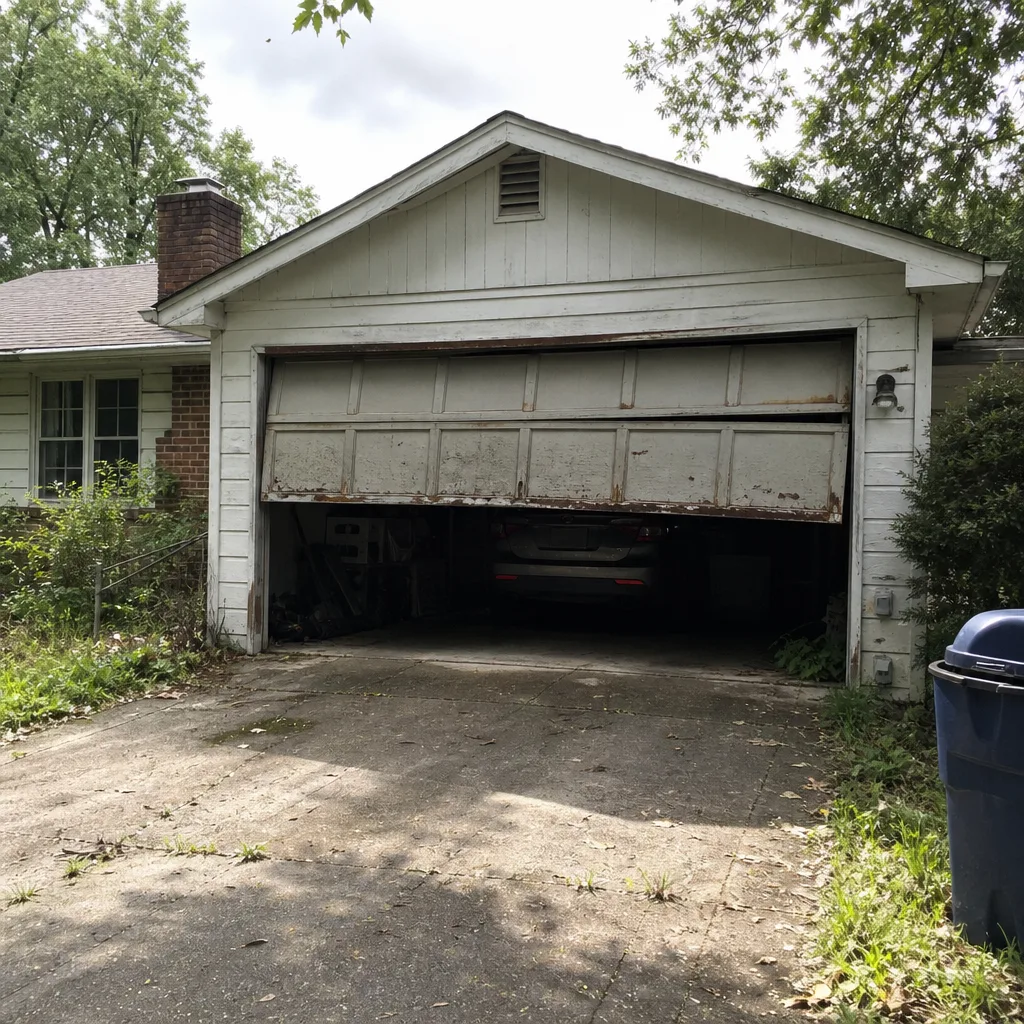 Before
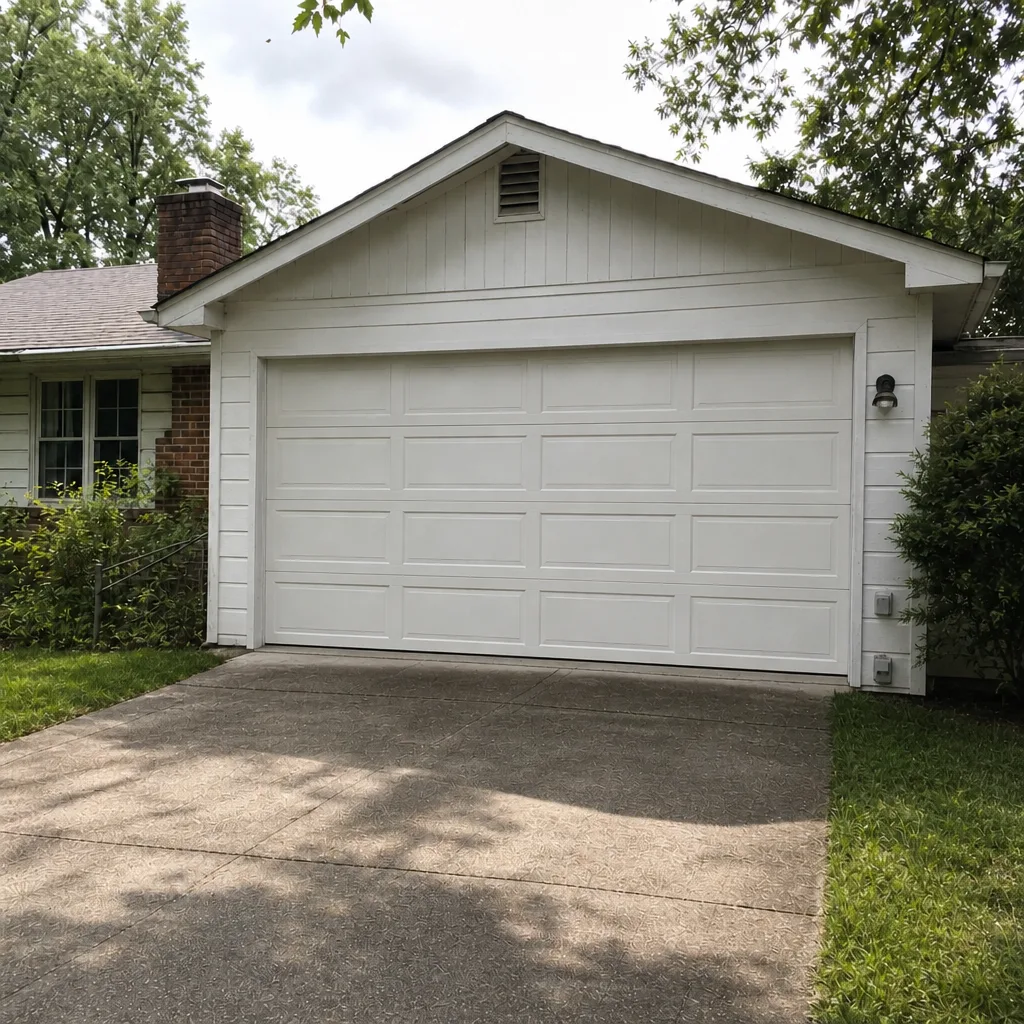 After
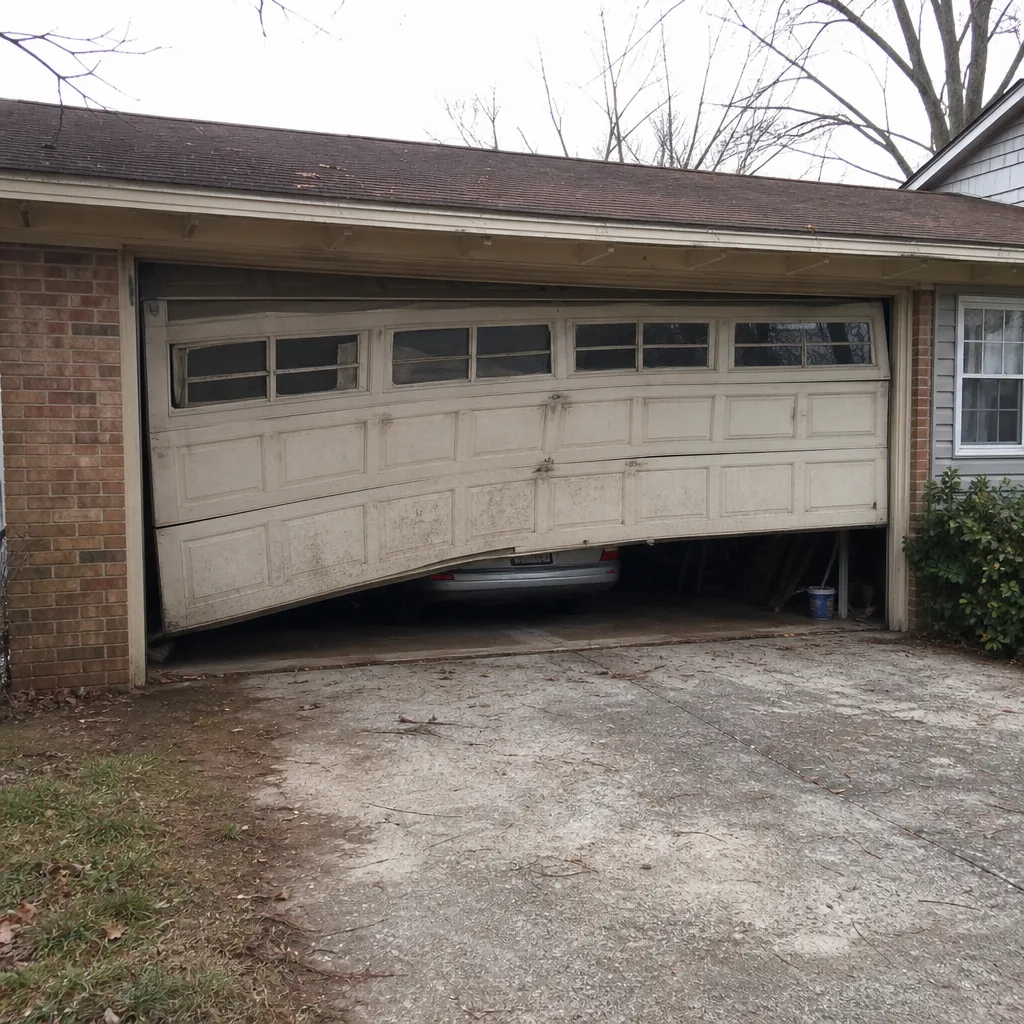 Before
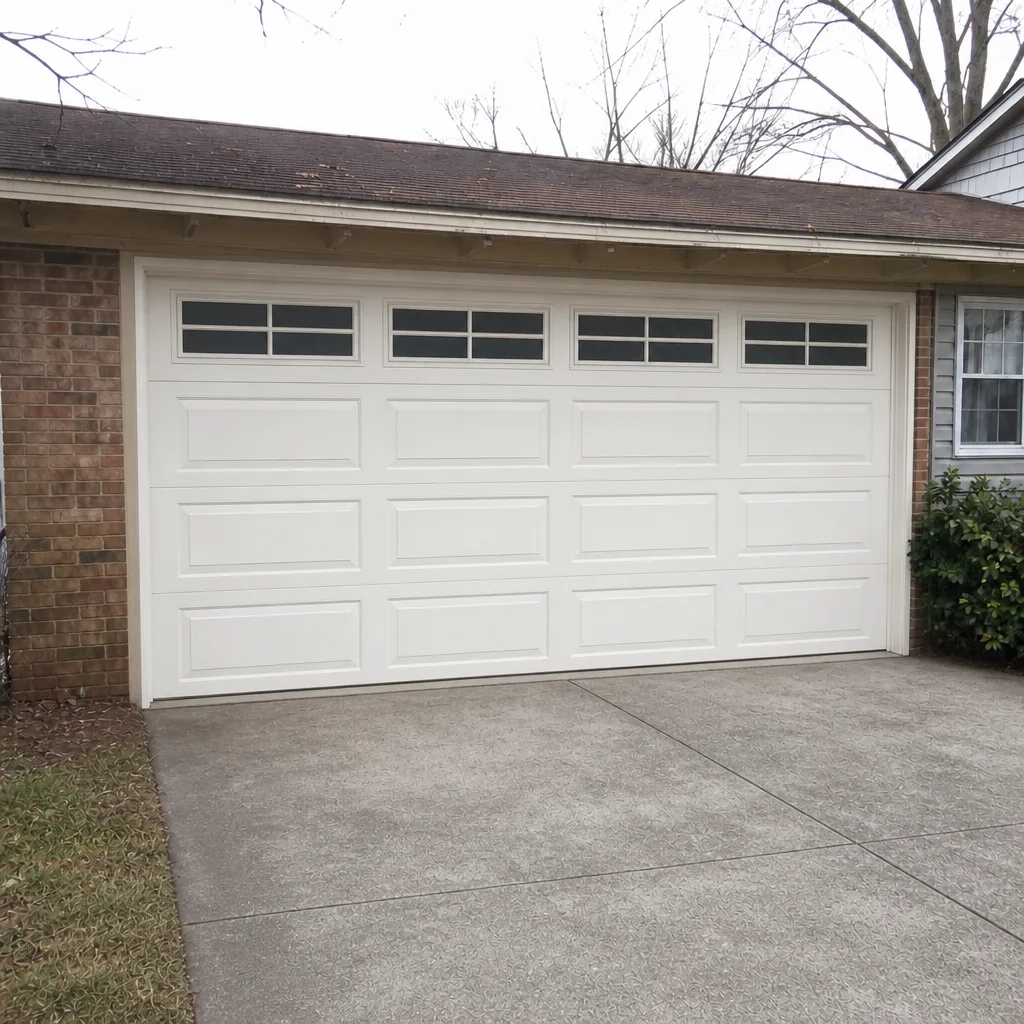 After
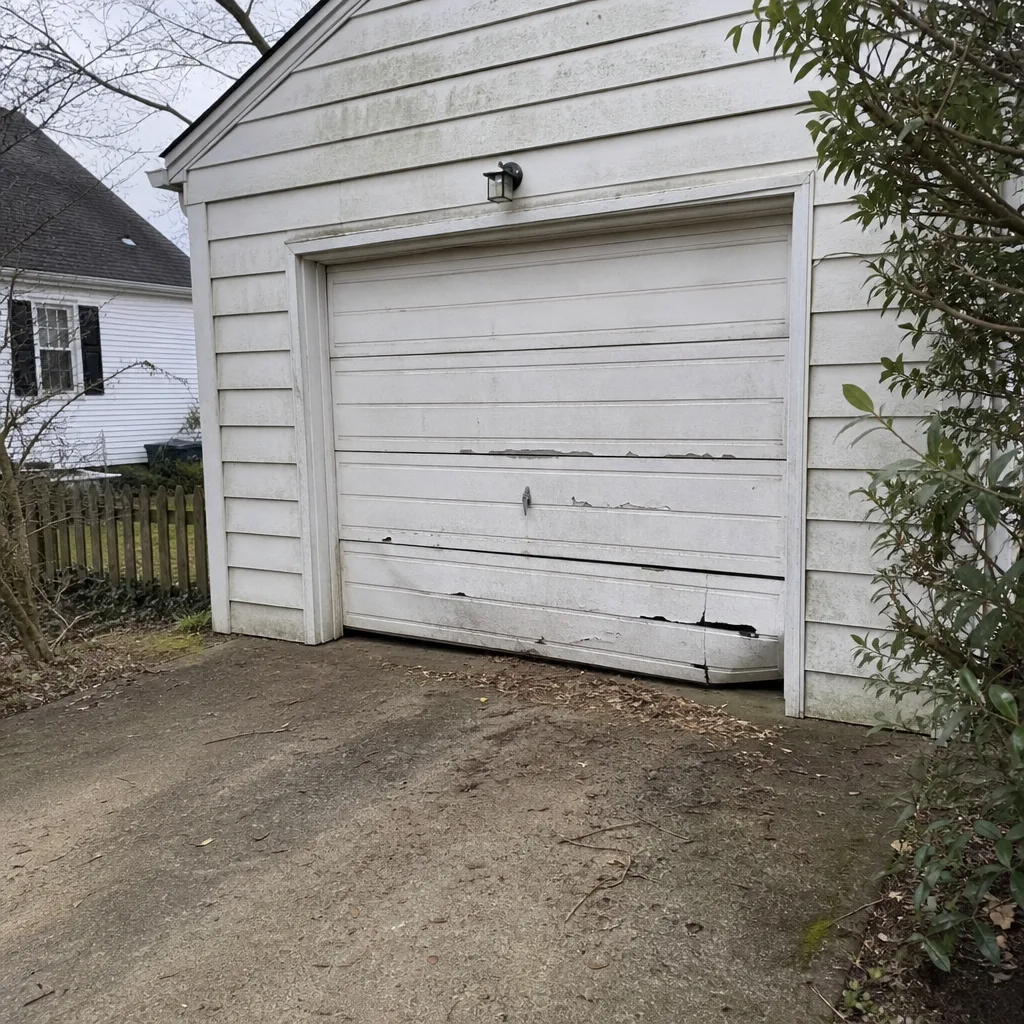 Before
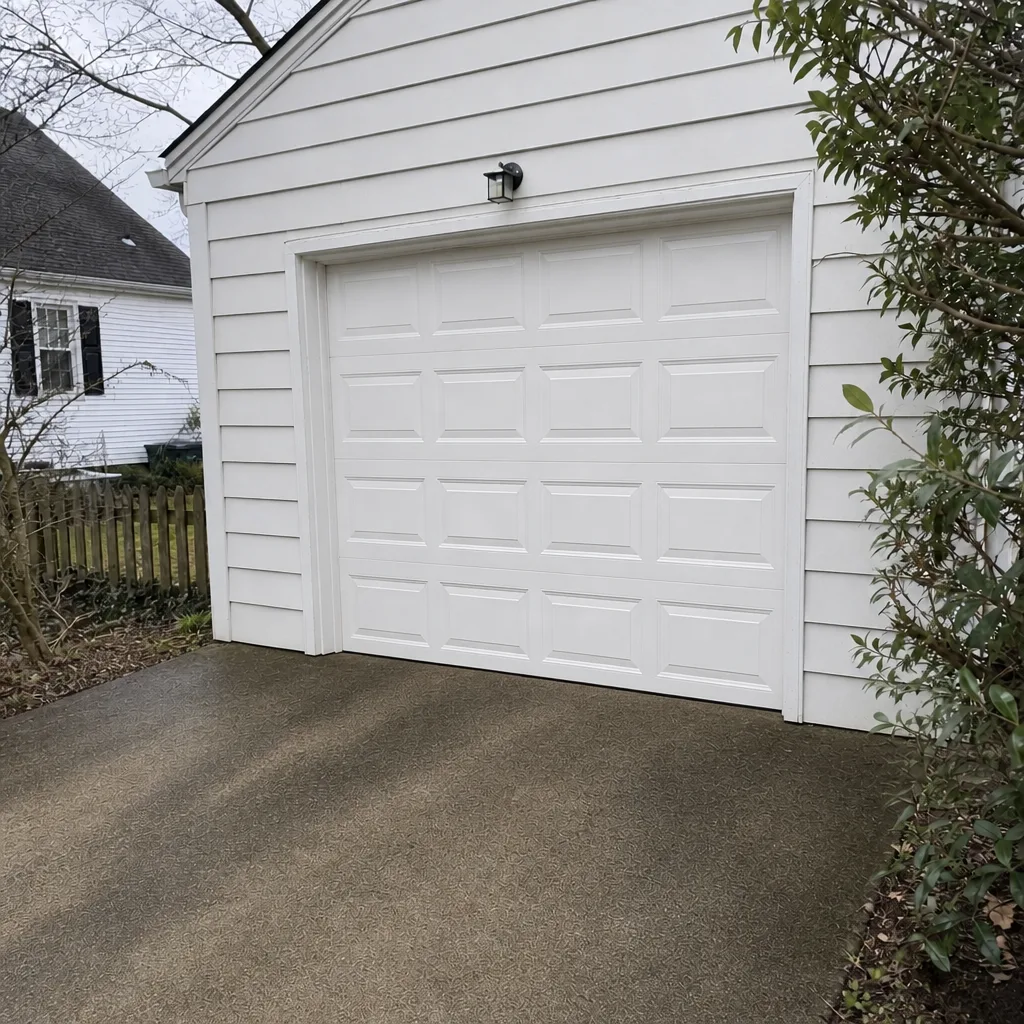 After
When to Call a Professional
Some garage door problems are a call to a technician, not a weekend project. If a spring is broken, a cable is slack or hanging, a door has come off its track, or the door is stuck open and your home is unsecured, stop and call. Springs and cables are under extreme tension and the single most dangerous component on the door. A door that’s been wind-damaged, one that’s heavy to lift by hand, and one that’s been manually released and won’t re-engage are all professional jobs too. The manual release itself is the one thing every homeowner should know how to use, and it’s covered above. Charlottesville Garage Door Repair offers free estimates in Charlottesville, and our technicians have up to 15 years of experience. Call (877) 770-2070 to get a written price before any work starts.
Frequently Asked Questions
Pull the manual release cord hanging from the carriage on the opener rail, then lift the door by hand. The door should lift with one hand if it’s balanced. Release it only when the door is fully closed, and re-engage the carriage by running the opener once power returns. If the cord is stiff or the trolley won’t disengage, call for service rather than forcing it.
Yes, for many repair and emergency calls. A door stuck open, a broken spring or a door off its track is the kind of call that gets priority. Call (877) 770-2070 and describe the symptom and whether the door is currently open. Installation and replacement work is measured and scheduled rather than same-day, since new doors are ordered to fit.
No. We quote the price and agree on it before any work starts, and the written estimate is the number you pay. If a technician finds something different from what was described on the phone, you’ll get a revised quote before they proceed. Nothing gets added to the invoice that wasn’t agreed upfront.
It cycles the door a limited number of times, not for the duration of the outage. Most units will open and close the door somewhere around a couple dozen cycles before the battery is spent. For a long outage, use the manual release to preserve the backup. Test the battery once a year by unplugging the opener.
Secure the house first: lock the interior door between the garage and the house, and block the door from being lifted from outside if you can do so safely. Don’t force the door closed if it’s off its track. Call for emergency service and describe it as an unsecured door, which moves it up the priority list.
The local professional who comes to your home is licensed and insured as the state requires. Our technicians have up to 15 years of experience and work on all major brands, including LiftMaster, Chamberlain, Genie, Clopay, Amarr, Wayne Dalton, Craftsman and Raynor. Estimates are free, and the price is agreed before work starts. Call (877) 770-2070 for a quote.
The Bottom Line
Most garage door emergencies in Charlottesville come down to preparation. Know where your manual release is and how it feels before you need it. Release the door with it fully closed, then pin it to the track so it can’t be lifted from outside. Inspect for storm damage after every major wind event, even if the door still works. Treat battery backup as a short-term tool, not a full-day solution. And when a spring, cable, track or panel is involved, call a professional rather than forcing the door. The one call worth making is the one that gets a written price before any work begins.
When your door won’t move, we will. Charlottesville Garage Door Repair handles repair, opener repair, spring repair, new installation and emergency service across Charlottesville, and we work on your brand. Call (877) 770-2070 for a free estimate and a written price agreed before we start.
Written by the team at Charlottesville Garage Door Repair.